

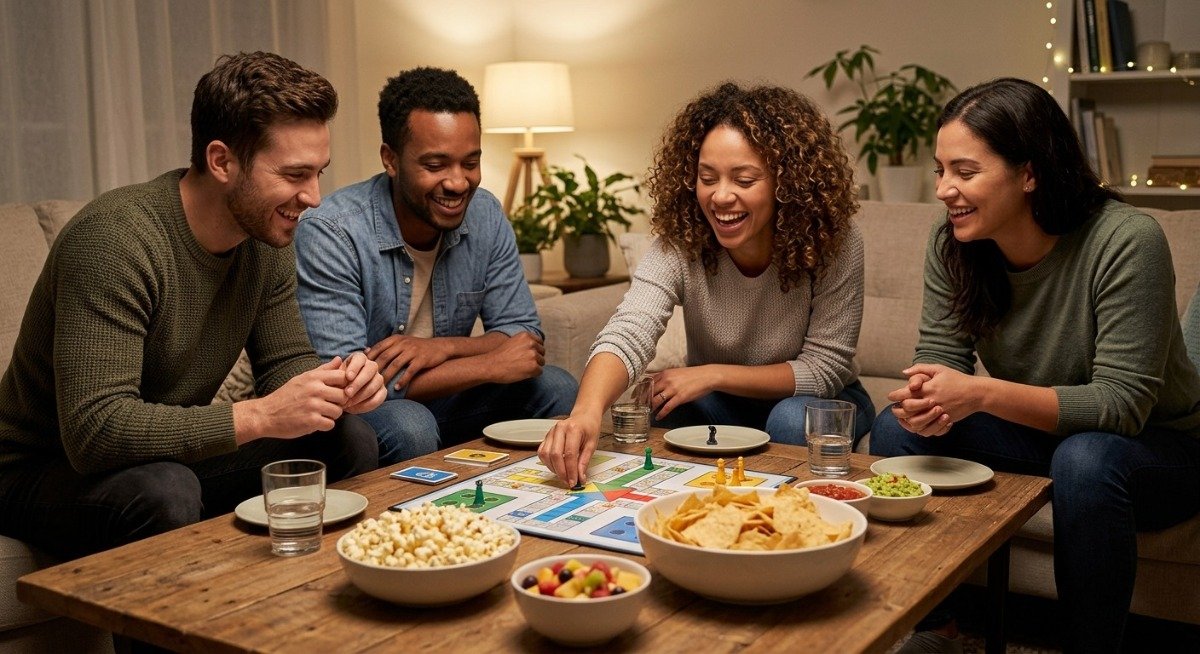
Dinner out with six friends can easily cost a few hundred dollars once drinks, tax and tip are added. A game night at home costs a fraction of that and often ends up being the evening people remember.
Board games, card games and party games have made a big comeback, and you do not need a cupboard full of expensive boxes to host a great one. You need the right mix of people, games that fit the group and a little planning.
Keep the guest list manageable
Four to six players is the sweet spot for most games. Everyone gets a turn often enough to stay engaged, conversation flows across the table and you can still fit around a regular dining table. If more people want to come, plan two tables with different games and let people swap halfway through the evening.
Think about the mix too. A group of competitive strategy fans wants a different evening from a group of friends who mainly want to laugh. Neither is better; it just changes which games you pull out.
Pick games that fit the room
A good rule is to start light, go deeper in the middle and finish light again. Some reliable categories:
- Party games for the opening hour: quick word, drawing or guessing games that need almost no rules explanation.
- Cooperative games where everyone works together against the game. They are great for mixed groups because nobody gets crushed.
- Classic card games such as euchre or cribbage. Most Canadian households already own a deck of cards and a crib board, and someone at the table usually knows the rules.
- Dexterity games like crokinole, the flicking game that has been a Canadian living-room staple for well over a century.
- A deeper strategy game for the middle of the evening if the group enjoys thinking hard.
Before buying anything, ask friends what they already own. Most groups have enough between them for months of game nights. Libraries in many cities also lend board games for free.
Teach rules in under five minutes
Nothing kills momentum like a host reading a rulebook aloud for half an hour. Learn the game yourself beforehand, explain only the goal and the basic turn, then start playing and fill in details as situations come up. Playing one practice round openly, with everyone’s cards visible, is often the fastest way to teach.
Make food simple and shared
Snacks should be easy to eat with one hand and not leave greasy fingerprints on cards. Popcorn, veggies with dip, pretzels, cheese cubes and fruit work well. For a larger meal, a potluck spreads the cost: one person brings chili or a big salad, another brings dessert, the host supplies drinks. A slow cooker of meatballs or pulled pork can feed a crowd for very little money.
Set the food on a separate side table so the game table stays clear. Have coasters and a few cloths ready for spills.
A typical evening for six people can come in under $60: around $20 for snacks, $25 for a slow-cooker main and a little extra for drinks if guests do not bring their own. Compare that with a restaurant bill and it is easy to see why so many friend groups have switched.
Set the scene
Good lighting matters more than decorations. Bright, even light over the table makes cards and small pieces easy to read, while dim mood lighting belongs on the couch, not the game table. Low background music without lyrics keeps the room lively without drowning out conversation. Make sure there are enough chairs of the same height, and clear a spot for coats and bags so they do not end up on the table.
Try a themed night
Themes give a regular game night a fresh feel without extra cost. Ideas include a retro night with games from your childhood, a trivia tournament with teams and a whiteboard scoreboard, or a murder-mystery dinner where everyone plays a character.
For a casino-themed night, keep it about the show, not the stakes. Poker chips work as points, prizes are silly trophies, and some hosts put casino aviator on the TV in free demo mode so the group can vote together on when to cash out of each round.
Dress codes are optional but fun: a bow tie or a sparkly top makes the evening feel special, even in your own living room.
Set friendly house rules
A few simple agreements help everyone have a good time:
- Phones go face down during play unless someone is taking a photo.
- Experienced players help newcomers instead of quietly crushing them.
- Anyone can sit out a round to refill snacks or chat.
- The host picks the first game; the winner of each game picks the next.
- Agree on an end time, especially on work nights.
If two friends tend to argue over rules, appoint a neutral rules judge for the evening. It sounds silly, but it saves a lot of tension.
Include everyone
Watch for guests who are quieter or new to games. Pair them with a friendly teammate for their first round, choose games with simultaneous turns so nobody waits long, and avoid games built around inside jokes. If someone is colour-blind, check that the game does not rely on colour alone. Small adjustments like these make newcomers want to come back.
Make it a regular habit
The real magic of game nights shows up when they become a routine. A monthly date, rotating hosts, gives everyone something to look forward to and spreads the effort. A shared group chat can handle scheduling and let people vote on next month’s games or themes. Over time you may build a small shared collection, with each person buying one new game a year for the group.
The takeaway
A great game night does not depend on expensive equipment. Keep the group small, pick games that fit the people, teach rules quickly, share the food and add a theme now and then. The result is an affordable evening full of laughter, and a tradition your friends will keep asking about.

Discover more from Best Fitness Stores
Subscribe to get the latest posts sent to your email.