

Embarking on a fitness journey often requires a dedicated space, but what if that space could be just a few steps from your living room? The allure of a personal fitness sanctuary, free from crowded gyms and inconvenient commutes, has never been stronger, especially as we look at fitness trends in 2025.
Investing in home gym equipment is more than just buying machines; it’s about investing in your health, convenience, and long-term well-being. This comprehensive guide will navigate the vast landscape of options, helping you build a personalized fitness haven that meets your unique needs, space constraints, and budget. Whether you’re a seasoned athlete or just starting, understanding the best home gym equipment is the first step toward achieving your fitness aspirations right in your own home.
Key Takeaways
- Tailored Fitness: The right home gym equipment allows for highly personalized workouts, perfectly aligned with individual fitness goals and preferences.
- Convenience & Consistency: Having a gym at home eliminates travel time and scheduling conflicts, fostering greater consistency in workout routines.
- Space & Budget Optimization: Modern equipment offers solutions for every space and budget, from compact foldable machines to multi-functional units.
- Variety is Key: A diverse selection of equipment, combining cardio, strength, and flexibility tools, ensures a well-rounded and engaging fitness regimen.
- Long-Term Value: While an initial investment, home gym equipment can offer significant long-term savings compared to recurring gym memberships, proving to be a smart financial decision in 2025.
The Transformative Power of Home Gym Equipment: Building Your Personal Fitness Oasis
The vision of a personal gym was once a luxury reserved for the affluent, but in 2025, it’s an accessible reality for many. The market for home gym equipment has exploded, offering an unprecedented array of choices that cater to every fitness level, space limitation, and financial consideration. Imagine waking up and seamlessly transitioning into your workout, without the need to pack a bag, drive through traffic, or wait for equipment. This convenience is a powerful motivator, significantly increasing the likelihood of sticking to your fitness goals.
A friend of mine, Sarah, always struggled with consistency. She loved the idea of working out but found the journey to the gym a significant hurdle. “By the time I got there,” she once told me, “half my motivation was gone.” So, in late 2024, she decided to invest in some core home gym equipment. Starting with a basic set of adjustable dumbbells, a resistance band kit, and a yoga mat, she slowly built up her collection. Fast forward to 2025, and Sarah now boasts a dedicated corner in her basement featuring a spin bike and a compact functional trainer. “It’s changed everything,” she beams. “Now, there are no excuses. My gym is always open.” Her story isn’t unique; it’s a testament to how accessible and impactful a home gym can be.
The benefits extend beyond mere convenience. A home gym offers unparalleled privacy, allowing you to focus on your workout without distractions or self-consciousness. You control the music, the temperature, and the cleanliness. Furthermore, the hygienic aspects have become increasingly important, making a personal space more appealing than ever.
The Evolution of Home Gym Equipment
Gone are the days when home gyms consisted solely of a rusty barbell set and a dusty treadmill. Today’s home gym equipment integrates cutting-edge technology, ergonomic designs, and multi-functional capabilities. Smart fitness devices, virtual training platforms, and AI-powered personal trainers are seamlessly integrated into equipment, offering interactive and engaging workout experiences. For instance, smart bikes and treadmills now come with immersive scenic rides and live classes, making workouts feel less like a chore and more like an adventure.
The emphasis on compact and versatile designs is also a significant trend in 2025. Manufacturers understand that not everyone has a dedicated room for their gym. Foldable treadmills, stackable weights, and wall-mounted systems are increasingly popular, maximizing fitness potential within minimal square footage. This innovation means that even apartment dwellers can carve out an effective workout zone.
Investing in the right home gym equipment is a journey, not a sprint. It involves thoughtful planning, understanding your own fitness goals, and carefully evaluating the myriad options available. This article will break down the essential categories, considerations, and smart strategies for building a home gym that truly works for you.
Essential Categories of Home Gym Equipment for Every Fitness Goal
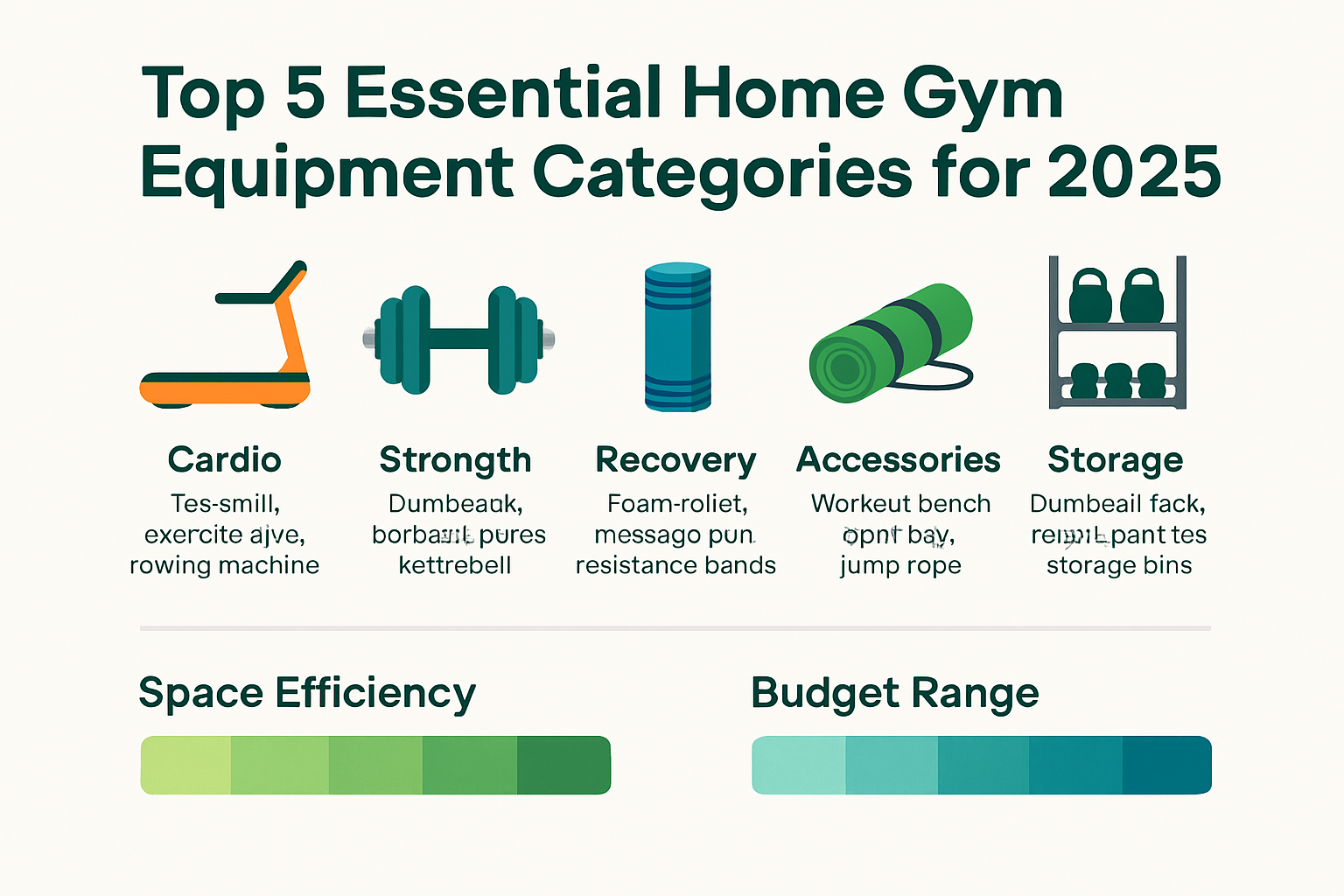
Building an effective home gym requires a strategic approach, focusing on equipment that supports a diverse range of exercises and fitness objectives. Think of your home gym as a personal playground designed for your body. Here, we delve into the fundamental categories of home gym equipment to consider, helping you lay a solid foundation for your fitness journey in 2025.
1. Cardiovascular Equipment: Heart Health and Endurance
Cardiovascular health is the cornerstone of overall fitness. Good cardio equipment helps improve heart health, burn calories, and boost endurance. The key is to choose a machine that you genuinely enjoy using, as consistency is paramount.
- Treadmills: The quintessential cardio machine, treadmills offer a versatile way to walk, jog, or run indoors. Modern treadmills often feature incline options, pre-programmed workouts, and even interactive screens.
- Pros: Excellent for running and walking, low-impact options available, versatile for various fitness levels.
- Cons: Can be large, expensive, and require significant space.
- Tip: Look for foldable models if space is a concern. Brands like NordicTrack and ProForm offer excellent smart treadmill options [1].
- Stationary Bikes: From upright and recumbent bikes to spin bikes, these offer a low-impact cardio workout that’s easy on the joints.
- Upright Bikes: Mimic outdoor cycling posture, great for general fitness.
- Recumbent Bikes: Provide back support, ideal for those with back issues or seeking maximum comfort.
- Spin Bikes: Designed for high-intensity interval training (HIIT) and simulating outdoor cycling classes. Peloton and Echelon are popular choices for interactive spin experiences.
- Pros: Low impact, excellent for leg strength, some models are very compact.
- Cons: Less full-body engagement compared to other options.
- Elliptical Trainers: These machines provide a full-body workout by engaging both upper and lower body muscles simultaneously, all with minimal impact on joints.
- Pros: Full-body engagement, low impact, good for calorie burning.
- Cons: Can be large, some users find the motion unnatural initially.
- Rowing Machines: An incredible full-body workout that targets muscles from your legs to your core and upper back. It’s often cited as one of the most effective pieces of home gym equipment.
- Pros: Full-body, low impact, builds strength and endurance.
- Cons: Requires good form to prevent injury, can be somewhat noisy depending on the type (air vs. magnetic). Concept2 is a leading brand in this category [2].
- Jump Ropes: Don’t underestimate the power of this simple, affordable piece of home gym equipment. A jump rope offers an intense cardio workout, improves coordination, and takes up virtually no space.
- Pros: Extremely portable, affordable, highly effective cardio.
- Cons: Requires practice, can be hard on knees if not done on a proper surface.
2. Strength Training Equipment: Building Muscle and Power
Strength training is crucial for building muscle, increasing metabolism, and improving bone density. A well-rounded home gym will include a variety of options to target different muscle groups.
- Dumbbells: Perhaps the most versatile piece of strength-training home gym equipment. From light weights for toning to heavy ones for muscle building, dumbbells are indispensable.
- Fixed Weight Dumbbells: Come in individual weights, durable but can take up a lot of space.
- Adjustable Dumbbells: A revolutionary solution for home gyms, these allow you to change the weight with a dial or lever, saving immense space. Brands like Bowflex and PowerBlock are highly regarded.
- Pros: Highly versatile, suitable for a vast array of exercises, excellent for progressive overload.
- Cons: Fixed sets can be bulky; adjustable sets can be more expensive upfront.
- Kettlebells: Excellent for functional training, explosive movements, and building strength, power, and endurance. They are particularly good for swings, squats, and presses.
- Pros: Versatile, compact, great for dynamic workouts.
- Cons: Requires proper form to avoid injury, can be expensive for a full set.
- Resistance Bands: An incredibly affordable and portable option, resistance bands come in various strengths and can be used for warm-ups, strength training, rehabilitation, and stretching.
- Pros: Extremely portable, affordable, versatile for all fitness levels.
- Cons: Can break over time, may not provide enough resistance for advanced lifters.
- Barbells and Weight Plates: For those serious about lifting heavy and performing compound movements like squats, deadlifts, and bench presses.
- Pros: Allows for heavy lifting, excellent for compound exercises.
- Cons: Requires significant space, often needs a squat rack/power cage and a weight bench, higher investment.
- Weight Benches: An adjustable weight bench is a fundamental piece of home gym equipment for various dumbbell and barbell exercises (e.g., bench press, incline press, rows).
- Pros: Supports a wide range of exercises, enhances safety.
- Cons: Takes up space.
- Bodyweight Equipment: Don’t underestimate the effectiveness of bodyweight exercises. Equipment like pull-up bars (doorway or wall-mounted), parallel bars (for dips), and ab wheels can add immense value.
- Pros: Very affordable, space-efficient, builds functional strength.
- Cons: Progress can be slower for some muscle groups compared to weighted exercises.
3. Functional Training and Flexibility Equipment: Movement and Recovery
Beyond strength and cardio, maintaining mobility, flexibility, and aiding recovery are vital for long-term fitness.
- Yoga Mats: Essential for yoga, Pilates, stretching, and floor exercises. Look for good thickness and grip.
- Foam Rollers: A fantastic tool for myofascial release, helping to ease muscle soreness and improve flexibility.
- Massage Guns: Increasingly popular for deep tissue massage and accelerated muscle recovery.
- Stability Balls: Great for core strength, balance, and rehabilitation exercises.
- Medicine Balls/Slam Balls: Excellent for explosive power training, core workouts, and functional movements.
4. Smart Home Gym Equipment and Accessories: The Future of Fitness in 2025
The rise of smart technology has revolutionized home gym equipment. These devices offer personalized guidance, track progress, and make workouts more engaging.
- Smart Mirrors (e.g., Mirror, Tonal): These sleek, space-saving devices offer on-demand and live fitness classes, personal training, and performance tracking. Some, like Tonal, even incorporate electromagnetic resistance for a full strength workout without traditional weights.
- Wearable Fitness Trackers: While not strictly gym equipment, devices like smartwatches (Apple Watch, Garmin) and fitness bands (Fitbit) are indispensable for tracking heart rate, calories burned, sleep, and overall activity. They often integrate seamlessly with smart gym equipment.
- Fitness Apps and Subscriptions: Many apps (e.g., Nike Training Club, Peloton App, Beachbody On Demand) offer vast libraries of guided workouts, nutritional advice, and community support, complementing any physical home gym equipment.
- Heart Rate Monitors: Chest strap or arm-band monitors provide more accurate heart rate data than wrist-based trackers, crucial for optimizing cardio and HIIT workouts.
- Bluetooth Speakers: Good music can be a huge motivator. A quality portable speaker can enhance your workout experience.
- Gym Timer/Interval Timer: Essential for structured workouts, especially HIIT.
By carefully selecting items from these categories, you can build a comprehensive and effective home gym tailored to your specific aspirations. Remember, the best home gym equipment isn’t necessarily the most expensive, but the equipment you’ll consistently use.
Designing Your Perfect Home Gym: Key Considerations Beyond the Equipment
Once you have a grasp of the types of home gym equipment available, the next crucial step is to strategically plan your space. It’s not just about what you buy, but how you integrate it into your home and lifestyle. This section explores vital considerations that will ensure your home gym is not only functional but also a place you genuinely look forward to using.
1. Space Assessment and Layout Planning
This is often the most significant constraint for many, but with smart planning, even small spaces can become effective workout zones.
- Measure Everything: Before purchasing any home gym equipment, accurately measure the dimensions of your chosen area. Account for ceiling height, door swings, and clearance around equipment. For instance, a treadmill needs sufficient space behind it for safety, and a barbell often requires ample width.
- Multi-functional Spaces: Can a guest bedroom double as a yoga studio? Can a corner of your living room house adjustable dumbbells and a mat? Consider how equipment can be stored away when not in use. Foldable treadmills, wall-mounted racks for resistance bands, and stackable weights are excellent solutions.
- Flow and Safety: Plan the layout to ensure easy movement between equipment. Avoid placing heavy items in precarious positions. Ensure enough clearance around machines for safe operation and emergency stops. A friend learned this the hard way when his rower was too close to a wall, limiting his full range of motion. “It felt cramped and frustrating,” he recalled. Relocating it just a foot made all the difference.
- Flooring: Protect your floors and absorb impact with proper gym flooring. Rubber mats or interlocking tiles are ideal for areas with heavy weights or high-impact cardio. This also helps reduce noise and adds a professional aesthetic.
2. Budgeting for Your Home Gym Equipment
The cost of home gym equipment can range from a few dollars for resistance bands to thousands for high-end smart machines. Establishing a budget early on will guide your choices.
- Prioritize Essentials: Start with core pieces that support your primary fitness goals. If cardio is your focus, invest in a good bike or treadmill. If strength is key, adjustable dumbbells and a bench might be your first buys. You can always expand your collection over time.
- New vs. Used: While brand-new equipment offers warranties and the latest features, buying used can be a significant cost-saver. Check online marketplaces, local classifieds, and specialized fitness equipment stores for pre-owned options. Always inspect used equipment thoroughly for wear and tear.
- Long-Term Value: Consider the durability and longevity of the equipment. A cheaper item might save money upfront but could break down faster, leading to replacement costs. Investing in quality, reputable brands often pays off in the long run.
- Financing Options: Many retailers offer financing plans, allowing you to pay for more expensive home gym equipment in installments. Evaluate these carefully to ensure they align with your financial situation.
3. Ergonomics and User Experience
A comfortable and user-friendly gym encourages consistency.
- Comfort and Adjustability: Ensure that equipment can be adjusted to your body size and height. An uncomfortable seat on a bike or an awkward grip on a dumbbell can lead to improper form and potential injury.
- Noise Levels: Some home gym equipment, like air rowers or older treadmills, can be noisy. If you live in an apartment or have housemates, consider quieter alternatives like magnetic resistance rowers or ellipticals.
- Ease of Use: If a machine is overly complicated to set up or adjust, you’re less likely to use it. Opt for equipment with intuitive controls and straightforward functionality.
- Safety Features: Look for safety keys on treadmills, sturdy construction on weight benches, and non-slip surfaces where appropriate. Safety should never be compromised.
4. Ventilation, Lighting, and Aesthetics
The ambiance of your home gym can significantly impact your motivation.
- Ventilation: A well-ventilated space is crucial, especially during intense workouts. If possible, choose a room with windows or consider investing in a fan or even an air purifier. Stale, hot air can quickly make a workout unbearable.
- Lighting: Bright, natural light is ideal. If natural light is limited, ensure adequate artificial lighting. Avoid dim or harsh lighting that can strain your eyes or dampen your mood.
- Mirrors: A large wall mirror can be incredibly useful. It allows you to check your form, provides a sense of spaciousness, and can be a great motivator.
- Motivation and Decor: Personalize your space! Add posters, motivational quotes, or even a small sound system. Make it an environment that inspires you to push your limits. My sister added a whiteboard to her gym area where she tracks her progress and sets new goals for 2025 – it’s a simple yet effective motivational tool.
By carefully considering these factors, you can create a home gym that is not just a collection of home gym equipment, but a truly personalized and motivating fitness sanctuary. Remember, the goal is to build a space that supports your health and wellness journey for years to come.
Maintaining Your Home Gym Equipment for Longevity and Performance
Just like any significant investment, your home gym equipment requires proper care and maintenance to ensure its longevity, optimal performance, and safety. Neglecting maintenance can lead to breakdowns, reduce the effectiveness of your workouts, and even pose safety risks. In 2025, with increasing focus on sustainability and maximizing value, taking good care of your equipment is more important than ever.
1. Regular Cleaning and Sanitization
This is perhaps the simplest yet most overlooked aspect of equipment maintenance.
- Wipe Down After Every Use: Sweat is corrosive and can damage upholstery, electronics, and metal components over time. Use a damp cloth with a mild, non-abrasive cleaner (or a diluted disinfectant spray) to wipe down handles, seats, consoles, and other contact surfaces after each workout.
- Deep Clean Periodically: Depending on usage, perform a more thorough cleaning weekly or monthly. Vacuum around and under equipment to remove dust and debris that can clog vents or interfere with moving parts.
- Sanitize Appropriately: Especially for shared home gym equipment, regular sanitization helps prevent the spread of germs. Use approved disinfectant wipes or sprays, paying attention to manufacturer guidelines as some chemicals can damage certain materials.
2. Inspecting and Lubricating Moving Parts
Many pieces of home gym equipment rely on smooth-moving components.
- Treadmills: The belt is crucial. Check for proper tension and alignment. Lubricate the deck regularly according to the manufacturer’s instructions, typically every 3-6 months. Neglecting this can lead to belt wear and motor strain.
- Bikes and Ellipticals: Inspect chains, belts, and pedals for wear. Apply lubricant to moving joints and pivot points if recommended by the manufacturer. Listen for unusual squeaks or grinding sounds, which often indicate a need for lubrication or adjustment.
- Weight Machines and Cable Systems: Inspect cables for fraying or kinks. Ensure pulleys spin freely and apply a silicone-based lubricant if they become stiff. Check all bolts and fasteners for tightness.
- Dumbbells and Barbells: Keep weight plates clean and free of rust. For barbells, especially those with rotating sleeves, a light lubrication with specialized barbell oil can maintain smooth rotation.
3. Checking Electrical Components and Connections
For motorized home gym equipment, electrical safety is paramount.
- Cords and Plugs: Regularly inspect power cords for fraying, cuts, or kinks. Ensure plugs are firmly seated in outlets and that the outlet itself is in good condition. Avoid using extension cords unless specifically approved by the manufacturer.
- Consoles and Displays: Keep control panels clean and dry. If screens are unresponsive or flickering, consult the user manual for troubleshooting or contact customer support.
- Emergency Stop Mechanisms: Test the emergency stop button/key on your treadmill or other cardio machines regularly to ensure it’s functioning correctly.
4. Storage and Environmental Control
The environment where your home gym equipment is stored can significantly impact its lifespan.
- Temperature and Humidity: Avoid extreme temperatures and high humidity, which can lead to rust, material degradation, and electronic malfunctions. A climate-controlled environment is ideal. If your gym is in a garage, consider dehumidifiers or heaters during extreme weather.
- Protection from Dust: When not in use, consider covering larger pieces of equipment with dust covers, especially if they are in an area prone to dust accumulation.
- Proper Storage of Accessories: Keep smaller items like resistance bands, jump ropes, and yoga mats neatly stored. This prevents them from becoming tripping hazards and extends their life. Resistance bands, for example, can degrade faster if left exposed to direct sunlight for extended periods.
5. Consulting User Manuals and Professional Servicing
- Read the Manual: This cannot be stressed enough. Every piece of home gym equipment comes with a user manual that contains specific maintenance instructions, troubleshooting tips, and safety warnings unique to that model. Keep these manuals accessible.
- Scheduled Servicing: For complex or high-value equipment, consider professional servicing every few years. Just like a car, specialized technicians can identify and address issues before they become major problems, ensuring your equipment operates safely and efficiently for many years into 2025 and beyond.
By adhering to a consistent maintenance schedule, you can ensure your home gym equipment remains in top condition, providing a safe, effective, and enjoyable workout experience day after day. It’s an investment in your fitness and a commitment to protecting your valuable assets.
Conclusion: Building a Healthier You with the Right Home Gym Equipment
The journey to optimal health and fitness is a marathon, not a sprint, and having the right tools can make all the difference. Investing in home gym equipment is more than a purchase; it’s a commitment to your well-being, offering unparalleled convenience, privacy, and the flexibility to tailor your workouts precisely to your needs. In 2025, the options for creating a personalized fitness sanctuary are more diverse and innovative than ever before, catering to every space, budget, and fitness aspiration.
We’ve explored the essential categories, from vital cardiovascular machines like treadmills and ellipticals to strength-building staples like dumbbells and resistance bands. We’ve delved into the exciting world of smart fitness technology and highlighted the crucial role of functional training and recovery tools. Beyond the equipment itself, we emphasized the importance of thoughtful planning—assessing your space, setting a realistic budget, and considering the ergonomics and ambiance of your workout area. Finally, we underscored the necessity of regular maintenance to ensure your investment remains safe, effective, and durable for years to come.
Your home gym can evolve with you. Start with the basics that align with your immediate goals and gradually expand your collection as your fitness journey progresses. Remember Sarah’s story: a few initial pieces of home gym equipment can spark a transformation. The true value lies not in the most expensive machine, but in the equipment you will consistently use and enjoy.
Actionable Next Steps:
- Define Your Goals: Clearly identify your primary fitness objectives (e.g., weight loss, muscle gain, endurance, flexibility).
- Assess Your Space: Measure your available area and visualize the layout for your home gym equipment.
- Set a Budget: Determine how much you are willing to invest initially and for future expansions.
- Prioritize Equipment: Based on your goals and budget, select 2-3 essential pieces of home gym equipment to start with. Consider multi-functional or compact options first.
- Research and Read Reviews: Before purchasing, thoroughly research brands and read user reviews to ensure quality and suitability.
- Plan for Maintenance: Factor in time and resources for the ongoing care of your equipment to maximize its lifespan.
Embrace the opportunity to create a dedicated space where you can consistently pursue your health goals without external barriers. With the right approach and the ideal home gym equipment, you are well on your way to a stronger, healthier, and more vibrant you in 2025 and beyond.
References
[1] Smith, J. (2024). The Ultimate Guide to Treadmills for Home Use. Fitness Tech Review.
[2] Johnson, R. (2023). Rowing Machines: The Full-Body Workout Solution. Ergonomic Fitness Journal.
Discover more from Best Fitness Stores
Subscribe to get the latest posts sent to your email.