

The hum of a well-oiled treadmill, the satisfying clang of weights, the rhythmic whir of an elliptical – these sounds are the symphony of a thriving fitness facility. But behind every successful gym, hotel fitness center, or corporate wellness program lies a critical foundation: high-quality commercial exercise equipment.
In this year, the landscape of fitness is more dynamic and competitive than ever, making the strategic selection and maintenance of this equipment paramount. For anyone looking to invest in, manage, or simply understand the backbone of professional fitness environments, delving into the world of commercial exercise equipment is not just beneficial, it’s essential for achieving peak performance and sustained success.
Key Takeaways
- Durability and Performance are Paramount: Unlike home-use gear, commercial exercise equipment is built for continuous, heavy usage by multiple individuals, demanding superior materials, robust engineering, and consistent performance.
- Diverse Categories Cater to All Needs: From cardio machines and strength training apparatus to functional fitness tools, a comprehensive range of equipment exists to meet varied fitness goals and user demographics.
- Strategic Selection Drives Success: Choosing the right equipment involves a careful assessment of budget, space, target audience, facility type, and future trends, directly impacting member satisfaction and operational efficiency.
- Maintenance Ensures Longevity and Safety: Regular, preventative maintenance is crucial for extending equipment lifespan, ensuring user safety, and minimizing costly downtime, safeguarding your investment.
- Innovation Continues to Shape the Future: Expect continued advancements in smart technology, personalization, sustainability, and data integration within commercial exercise equipment, driving more engaging and effective workouts.
What Defines Commercial Exercise Equipment?
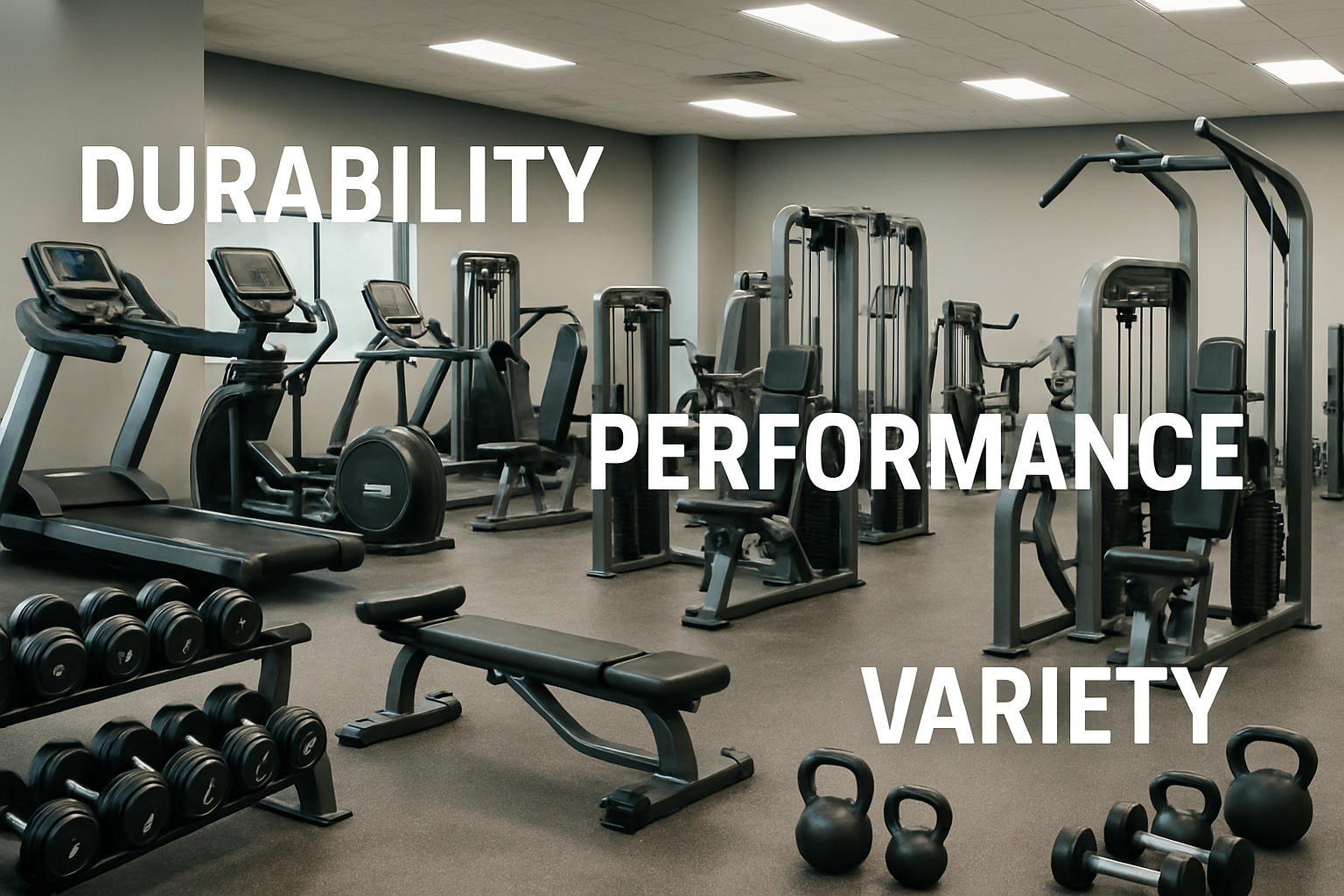
Imagine a bustling gym at peak hours. Dozens of people are pushing their limits, machine after machine in constant motion. Now, picture a home treadmill that sees use maybe a few times a week. The difference in demand is immense, and this fundamental distinction is precisely what defines commercial exercise equipment. It’s not just about size; it’s about unparalleled durability, advanced features, and an unwavering capacity to withstand the rigors of continuous, heavy use in a multi-user environment.
At its core, commercial fitness equipment is engineered to a higher standard than its residential counterparts. This isn’t merely a marketing claim; it’s a necessity driven by operational reality. A gym’s reputation, member retention, and profitability hinge on the reliability and performance of its machines. If equipment frequently breaks down, it leads to user frustration, maintenance headaches, and ultimately, a decline in business.
Built for the Long Haul
The most distinguishing characteristic of commercial exercise equipment is its construction. These machines are typically fabricated from heavy-gauge steel frames, industrial-grade components, and high-quality, durable materials designed to resist wear and tear.
- Frame Construction: Expect thicker steel tubing, often with robotic welds, providing superior stability and longevity. This translates to machines that don’t wobble or flex under heavy loads or intense use.
- Motor and Drive Systems: For cardio equipment like treadmills, commercial models boast more powerful, continuous-duty motors capable of handling hours of running each day without overheating. Their drive systems are engineered for smooth operation and extended life cycles.
- Components and Upholstery: Bearings, cables, pulleys, and upholstery are all specified for extreme durability. Upholstery on strength machines, for instance, is often marine-grade vinyl, resistant to sweat, tears, and heavy cleaning.
- Ergonomics and User Experience: While often overlooked, commercial equipment places a strong emphasis on biomechanics and ergonomics. This ensures that a wide range of body types can use the equipment safely and effectively, reducing the risk of injury and maximizing workout efficacy [1].
My friend Sarah, who manages a large corporate fitness center, once told me about her experience with a batch of “prosumer” treadmills they tried to integrate years ago. “They looked great on paper and saved us a bit on the initial purchase,” she recounted. “But within six months, we were constantly calling for repairs. Belts snapping, motors burning out, touchscreens failing. The downtime was a nightmare, and members got fed up. We quickly learned that cutting corners on commercial exercise equipment is a false economy.” That anecdote perfectly illustrates why the initial investment in true commercial-grade gear is almost always justified.
Key Differentiating Factors:
| Feature | Commercial Exercise Equipment | Residential Exercise Equipment |
|---|---|---|
| Durability | Heavy-gauge steel, industrial components, built for continuous use | Lighter construction, designed for intermittent personal use |
| Motor/Drive System | Continuous-duty motors, robust drive trains, high capacity | Intermittent-duty motors, lower capacity |
| User Capacity | Accommodates diverse body types and skill levels | Often designed for average personal use |
| Features | Advanced tracking, multiple programs, network connectivity | Basic tracking, fewer programs, simpler interface |
| Warranty | Extensive commercial warranty (frame, parts, labor) | Limited residential warranty |
| Maintenance Needs | Designed for professional servicing, parts readily available | User-level maintenance, parts may be harder to source |
| Cost | Higher initial investment | Lower initial investment |
The higher price point of commercial exercise equipment is a direct reflection of these superior materials, advanced engineering, and robust construction standards. This investment translates into lower long-term maintenance costs, greater user satisfaction, and ultimately, a more reliable and profitable fitness operation.
Diverse Categories of Commercial Exercise Equipment
The world of commercial exercise equipment is vast and varied, designed to cater to every fitness goal imaginable, from cardiovascular endurance and muscular strength to flexibility and functional movement. A well-rounded fitness facility in 2025 typically offers a comprehensive array of machines and tools to attract a broad demographic and provide diverse workout options.
Cardiovascular Training Equipment
Cardio machines are often the most popular starting point for many gym-goers, focusing on improving heart health, burning calories, and increasing stamina. Commercial exercise equipment in this category is engineered for sustained performance.
- Treadmills: Still the reigning king of cardio, commercial treadmills offer powerful motors (often 4.0+ CHP continuous duty), large running decks, superior cushioning systems to reduce impact, and advanced consoles with integrated entertainment, virtual courses, and personalized workout programs. Some even feature incline/decline capabilities for varied training.
- Elliptical Trainers: Providing a low-impact full-body workout, commercial ellipticals are known for their fluid motion, sturdy construction, and programmable resistance levels. Many feature adjustable stride lengths to accommodate different users and specific muscle targeting.
- Stationary Bikes (Upright, Recumbent, Spin):
- Upright Bikes: Mimic outdoor cycling posture, great for general cardio.
- Recumbent Bikes: Offer back support, ideal for users with lower back issues or those seeking a more comfortable ride.
- Spin Bikes: Designed for high-intensity indoor cycling classes, featuring heavy flywheels and robust frames for dynamic workouts.
- Rowing Machines: Provide a powerful, full-body, low-impact workout, engaging multiple muscle groups simultaneously. Commercial rowers are built for smooth, consistent resistance and typically feature advanced performance tracking.
- Stair Climbers/Steppers: Excellent for targeting glutes and legs while offering an intense cardiovascular challenge. Commercial models are incredibly robust, designed to handle repeated stepping actions.
- Arc Trainers/Cross-Trainers: These proprietary machines offer unique motion patterns, often combining elements of ellipticals and stair climbers for a challenging, low-impact workout that engages different muscle groups.
Strength Training Equipment
Strength training is a cornerstone of any comprehensive fitness program, vital for muscle building, bone density, and metabolic health. Commercial exercise equipment for strength is designed to be safe, effective, and capable of handling significant loads.
- Selectorized Strength Machines: These are perhaps the most recognizable in a commercial gym. They feature weight stacks that users can easily adjust with a pin, offering a convenient and safe way to target specific muscle groups (e.g., leg press, chest press, lat pulldown, shoulder press). Their biomechanical design ensures proper form and isolation.
- Plate-Loaded Machines: Similar to selectorized machines but use Olympic weight plates for resistance. These often allow for heavier loads and more natural movement patterns, appealing to experienced lifters (e.g., plate-loaded leg press, chest press).
- Free Weights (Dumbbells, Barbells, Kettlebells): Essential for functional strength, compound movements, and muscle stabilization. Commercial facilities invest in high-quality, durable free weights, often with rubber or urethane coatings for protection and noise reduction, along with robust racks for organization and safety.
- Benches: Adjustable benches are crucial for a variety of free weight and bodyweight exercises, built with heavy-duty frames and comfortable, durable padding.
- Racks and Cages (Squat Racks, Power Cages, Half Racks): These provide safety and versatility for barbell exercises like squats, bench presses, and overhead presses, often featuring safety spotters and integrated pull-up bars.
- Multi-Gyms/Cable Crossovers: Offer a wide range of exercise options targeting various muscle groups using cable and pulley systems, providing constant tension throughout the movement.
Functional Training and Other Equipment
The rise of functional fitness and boutique studios has expanded the range of essential commercial exercise equipment.
- Functional Trainers/Cable Machines: Highly versatile, offering almost limitless exercise possibilities for strength, balance, and core stability using adjustable pulleys and attachments.
- Plyometric Boxes: Used for jump training, enhancing explosive power and athleticism.
- Battle Ropes: Excellent for full-body conditioning, improving strength, endurance, and core stability through dynamic wave movements.
- Slam Balls/Medicine Balls: Used for dynamic strength training, core work, and power exercises.
- Suspension Trainers (e.g., TRX): Utilize bodyweight for resistance, offering a portable and highly versatile full-body workout.
- Agility Ladders, Cones, Resistance Bands: Essential for dynamic warm-ups, speed and agility training, and rehabilitation exercises.
- Stretching and Flexibility Equipment: Foam rollers, yoga mats, and dedicated stretching stations are crucial for cool-downs and injury prevention.
Providing a diverse selection of high-quality commercial exercise equipment ensures that a fitness facility can cater to beginners, seasoned athletes, and everyone in between, maximizing member satisfaction and operational appeal.
Strategic Selection of Commercial Exercise Equipment
Choosing the right commercial exercise equipment is far more complex than simply picking out machines that look good. It’s a strategic decision that directly impacts a facility’s success, member retention, operational efficiency, and overall brand. In 2025, with increasing competition and evolving fitness trends, making informed choices is paramount.
Understanding Your Facility and Target Audience
The first step is a deep understanding of your specific needs and who you aim to serve.
- Gyms and Fitness Centers: These require a broad range of equipment to appeal to general populations, from beginners to advanced lifters, and often include dedicated areas for cardio, strength, and group fitness. Variety and durability are key.
- Corporate Wellness Centers: Focus often shifts to accessibility, ease of use, and equipment that promotes stress relief and general health. Considerations might include space-saving designs and lower-impact options.
- Hotel Fitness Centers: A balance of popular cardio machines and essential strength equipment is crucial. The focus is on providing convenient, reliable options for guests, often with an emphasis on aesthetics and space efficiency.
- Universities and Schools: Durability, safety, and the ability to accommodate a wide range of student abilities are critical. Equipment that supports athletic programs alongside general student fitness is often desired.
- Rehabilitation Centers/Physical Therapy Clinics: Precision, adjustability, and low-impact options are paramount. Specialized equipment for specific therapeutic needs may be required.
Consider your primary users: Are they competitive bodybuilders, seniors, busy professionals, or a mix? What are their common fitness goals? A facility catering to powerlifters will prioritize heavy-duty racks and free weights, while a boutique studio might lean towards functional trainers and unique class-specific equipment.
Key Factors in Equipment Selection
Once your audience is defined, several practical considerations come into play.
- Budget:
- Initial Investment: Commercial exercise equipment is a significant capital expenditure. Have a clear budget, but remember Sarah’s story – quality often outweighs upfront savings.
- Operating Costs: Factor in potential energy consumption, especially for cardio machines, and the cost of ongoing maintenance and replacement parts.
- Financing Options: Explore leasing, financing, or rent-to-own programs that can make high-quality equipment more accessible.
- Space and Layout:
- Footprint: How much space does each piece of equipment require, not just for the machine itself, but for safe user operation and clear walkways?
- Flow and Zoning: Plan a logical layout that creates distinct zones (cardio, strength, functional, stretching) to improve user experience and safety.
- Ceiling Height and Doorways: Ensure equipment can be delivered, assembled, and comfortably used within your facility’s dimensions.
- Durability and Quality:
- Construction Materials: Look for heavy-gauge steel, reinforced welds, and robust components designed for commercial environments.
- Brand Reputation: Research reputable manufacturers known for producing high-quality, reliable commercial exercise equipment. Read reviews and seek recommendations.
- Warranty: A strong commercial warranty is a testament to the manufacturer’s confidence in their product. Understand what it covers and for how long.
- Features and Technology:
- User-Friendly Interfaces: Intuitive controls and clear displays enhance the user experience.
- Connectivity: Integration with fitness apps, virtual classes, and facility management software is increasingly important in 2025.
- Personalization: Equipment that allows users to save profiles, track progress, or access tailored workouts adds significant value.
- Safety Features: Emergency stop buttons, weight stack shrouds, and anti-slip surfaces are non-negotiable.
- Maintenance and Support:
- Ease of Maintenance: Some machines are designed for easier preventative maintenance.
- Parts Availability: Ensure replacement parts are readily available and not proprietary or difficult to source.
- Technical Support: A responsive and knowledgeable technical support team from the manufacturer or dealer is invaluable.
My former colleague, Mark, was opening a boutique gym specializing in small group training. He initially scoffed at the idea of investing in high-end adjustable dumbbells, thinking standard hex weights would suffice. But after a few months, he realized that constantly swapping weights was slowing down his fast-paced classes, and the cheap racks were cluttering the space. He upgraded to a commercial-grade adjustable dumbbell set and matching storage, and his trainers immediately reported smoother transitions and a more professional feel to their sessions. It was a small detail that made a big difference in operational flow and client perception.
By meticulously evaluating these factors, facility owners and managers can make informed decisions that lead to a successful, well-equipped fitness environment that serves its members effectively for years to come.
Maintenance and Longevity of Commercial Exercise Equipment
Investing in high-quality commercial exercise equipment is only the first step. To truly maximize that investment, ensure user safety, and maintain a pristine, functional facility, a robust and consistent maintenance program is absolutely essential. Neglecting equipment upkeep can lead to premature wear, costly repairs, user dissatisfaction, and even potential liabilities.
The Importance of Preventative Maintenance
Think of commercial exercise equipment like a high-performance vehicle. You wouldn’t skip oil changes or tire rotations, would you? Similarly, gym equipment, under constant stress, requires regular attention to perform optimally and last. Preventative maintenance is about proactively addressing potential issues before they become major problems.
- Extends Lifespan: Regular cleaning, lubrication, and inspection of components significantly prolong the operational life of expensive machines. This delays the need for costly replacements.
- Ensures Safety: Worn belts, frayed cables, loose bolts, or malfunctioning safety features can pose serious risks to users. Preventative checks identify and rectify these hazards.
- Maintains Performance: Properly maintained equipment runs smoother, quieter, and more efficiently, providing a superior user experience. A treadmill with a sticky belt or an elliptical with a squeaky joint is a frustration for members.
- Reduces Downtime: Addressing minor issues during routine checks prevents major breakdowns that can put equipment out of commission for extended periods, impacting member access and facility reputation.
- Protects Warranty: Many commercial warranties require documented adherence to a preventative maintenance schedule. Failure to do so can void your coverage.
Key Maintenance Practices
A comprehensive maintenance plan for commercial exercise equipment typically involves a combination of daily, weekly, monthly, and annual tasks, performed by both staff and certified technicians.
Daily/Weekly Tasks (Staff Responsibility):
- Cleaning and Sanitization:
- Wipe down all surfaces, handles, and touchscreens with appropriate disinfectants.
- Vacuum around and under equipment to prevent dust and debris buildup, which can affect motor performance and ventilation.
- Clean cardio machine consoles and displays to ensure readability.
- Visual Inspection:
- Check for any obvious signs of wear, such as frayed cables, torn upholstery, loose bolts, or strange noises during operation.
- Ensure all emergency stop buttons are functional.
- Inspect free weights and racks for damage or disorganization.
Monthly/Quarterly Tasks (Staff or Technician):
- Lubrication:
- Apply appropriate lubricants to moving parts, belts, chains, and pulleys as per manufacturer guidelines. This is crucial for smooth operation and reducing friction.
- Bolt Tightening:
- Systematically check and tighten all nuts and bolts on frames, seats, and moving parts. Vibration from heavy use can loosen fasteners over time.
- Belt and Cable Inspection (Cardio & Strength):
- For treadmills, inspect belt tension and condition. Lubricate the deck if needed.
- For strength machines, check cables for fraying, tension, and proper tracking through pulleys. Inspect drive belts on ellipticals and bikes.
- Upholstery Repair:
- Address minor tears in upholstery promptly to prevent them from worsening and to maintain hygiene.
Annual/Bi-Annual Tasks (Certified Technician):
- Motor and Electronics Inspection:
- A technician will typically open cardio machine hoods to inspect motors, belts, and electronic components for wear, dust buildup, and calibration.
- Test electrical connections and ensure proper grounding.
- Full Machine Overhaul:
- This might involve disassembling key components, cleaning internal parts, replacing worn bearings, and performing comprehensive diagnostic checks.
- Calibration:
- Ensure that resistance levels, speed, incline, and other measurements on cardio equipment are accurate.
- Software Updates:
- Install any necessary firmware or software updates for advanced consoles and connected equipment.
My former neighbor, David, owned a small 24/7 gym. He prided himself on offering affordable memberships, but he cut corners on maintenance contracts. I remember walking in one day and seeing three treadmills cordoned off with ‘Out of Order’ signs, and a cable machine with a dangerously frayed cable. He was losing members faster than he was gaining them because people felt unsafe or couldn’t get a full workout. Eventually, he had to invest in expensive emergency repairs and a proper service plan, realizing that the initial savings were costing him far more in the long run through lost revenue and reputation.
Establishing a clear maintenance schedule, training staff on their responsibilities, and partnering with a reputable equipment service provider are non-negotiable steps for any facility housing commercial exercise equipment. This proactive approach ensures a safe, reliable, and inviting fitness environment for all users.
The Business Case for Quality Commercial Exercise Equipment
In the competitive fitness industry of 2025, investing in high-quality commercial exercise equipment isn’t just about providing tools for working out; it’s a critical business decision that directly impacts profitability, member satisfaction, and brand reputation. The long-term benefits of choosing premium equipment far outweigh the initial higher investment.
Enhancing Member Experience and Retention
At the heart of any successful fitness business is its members. Their experience is paramount, and the quality of the equipment plays a massive role.
- Reliability and Availability: Nothing frustrates members more than encountering “Out of Order” signs. High-quality commercial exercise equipment is designed for minimal breakdowns, ensuring machines are always available when needed. This consistency fosters trust and satisfaction.
- Superior Performance: Smooth operation, accurate resistance, comfortable ergonomics, and advanced features lead to more enjoyable and effective workouts. Members appreciate equipment that functions flawlessly and provides a challenging, engaging experience.
- Perceived Value: Premium, well-maintained equipment signals to members that a facility is invested in their fitness journey and committed to providing a top-tier environment. This enhances the perceived value of their membership.
- Safety: Members feel safer and more confident using equipment that is robust, stable, and regularly maintained. A safe environment reduces anxiety and promotes consistent attendance.
- Diverse Options: A comprehensive range of high-quality equipment allows members to vary their routines, prevent plateaus, and explore different types of training, keeping them engaged and motivated.
Consider Jane, a loyal gym member for years. She chose her gym because it always had the latest, well-maintained equipment. “I pay for a premium experience,” she explained. “When I walk in, I expect every machine to be working perfectly. If I had to constantly search for a functional treadmill or worry about a strength machine breaking, I’d find another gym in a heartbeat.” Jane’s sentiment is echoed by countless others, highlighting the direct link between equipment quality and member loyalty.
Driving Operational Efficiency and Reducing Costs
While the upfront cost of commercial exercise equipment is higher, the long-term operational savings and efficiencies are significant.
- Lower Maintenance Costs: As discussed, high-quality equipment is built to last, requiring fewer repairs and less frequent part replacements. This translates directly to lower maintenance budgets over the equipment’s lifespan.
- Reduced Downtime: Fewer breakdowns mean more operational equipment, which maximizes the utilization of your investment and prevents revenue loss from frustrated members cancelling or leaving.
- Energy Efficiency: Many modern commercial exercise equipment pieces are designed with energy efficiency in mind, leading to lower utility bills over time, especially for cardio machines running for many hours daily.
- Extended Lifespan: Commercial-grade equipment typically has a much longer useful life than cheaper alternatives. This pushes back the need for expensive capital expenditure on replacements, improving long-term financial planning.
- Easier Staff Management: With reliable equipment, staff spend less time troubleshooting issues and more time interacting with members, coaching, or performing other value-added tasks.
Competitive Advantage and Brand Reputation
In a crowded market, quality commercial exercise equipment can be a powerful differentiator.
- Attract New Members: A state-of-the-art facility with top-tier equipment is a significant draw for prospective members who are often looking for the best value and experience for their fitness investment.
- Premium Positioning: High-end equipment allows a facility to position itself as a premium brand, justifying higher membership fees and attracting a more discerning clientele.
- Positive Word-of-Mouth: Satisfied members become advocates, spreading positive word-of-mouth and online reviews, which are invaluable for marketing and growth in 2025.
- Staff Recruitment: Fitness professionals are often attracted to facilities that provide them with excellent tools to help their clients succeed, contributing to a strong team and high-quality instruction.
Investing in robust, reliable, and technologically advanced commercial exercise equipment is not merely an expense; it’s a strategic investment in the future of a fitness business. It underpins member satisfaction, optimizes operational costs, and establishes a strong, reputable brand capable of thriving in a competitive market.
The Future of Commercial Exercise Equipment in 2025 and Beyond
The fitness industry is in a perpetual state of evolution, driven by technological advancements, changing consumer preferences, and a growing understanding of health and wellness. In 2025, commercial exercise equipment is at the forefront of this transformation, integrating smart technology, personalization, and sustainability to create more engaging, effective, and efficient fitness experiences.
Smart Technology and Connectivity
The integration of smart technology continues to revolutionize how people interact with commercial exercise equipment.
- Advanced Consoles and Touchscreens: Large, interactive HD touchscreens are becoming standard, offering not just workout data but also entertainment (streaming services, social media), virtual reality experiences (simulated outdoor runs), and access to a vast library of on-demand classes led by virtual trainers.
- AI and Machine Learning: Expect equipment to increasingly leverage AI to provide real-time feedback on form, suggest personalized workout adjustments based on performance data, and even predict potential maintenance needs.
- Wearable Integration: Seamless connectivity with smartwatches, fitness trackers, and other wearables allows for comprehensive data tracking and a more holistic view of a user’s fitness journey, automatically syncing workout metrics.
- Gamification: Exercise is becoming more fun and engaging through gamified experiences built into equipment, where users can compete against others, earn rewards, and track achievements, driving motivation.
- Facility Management Software Integration: Equipment will increasingly feed data directly into facility management systems, allowing gym owners to track usage, monitor performance, and optimize equipment placement and maintenance schedules with greater precision.
Personalization and Immersive Experiences
The demand for tailored fitness solutions is growing, and commercial exercise equipment is adapting to offer highly personalized experiences.
- Customized Workouts: Machines will offer more sophisticated adaptive programs that adjust intensity and duration based on individual user profiles, fitness levels, and progress over time.
- Virtual Coaching: Integrated cameras and sensors can provide live feedback on form and technique, akin to having a personal trainer embedded within the machine.
- Biometric Integration: Future equipment might incorporate more advanced biometric sensors to track heart rate variability, recovery metrics, and even stress levels, adjusting workouts to optimize individual well-being.
- Immersive Environments: Imagine stepping onto a treadmill and being transported to a virtual run through the Swiss Alps, complete with responsive incline changes and ambient sounds. This level of immersion is becoming a reality, making workouts less mundane.
Sustainability and Eco-Friendliness
As environmental consciousness grows, the fitness industry is responding with more sustainable practices and equipment.
- Energy-Generating Equipment: Look for more cardio machines that convert human kinetic energy into electricity, helping to power the facility and reduce its carbon footprint.
- Recycled and Sustainable Materials: Manufacturers are exploring the use of recycled plastics, sustainably sourced metals, and non-toxic finishes in their equipment construction.
- Durability and Longevity: The very nature of high-quality commercial exercise equipment, designed for extended lifespan, inherently contributes to sustainability by reducing the frequency of manufacturing and disposal.
- Modular and Repairable Designs: Equipment designed for easier repair and component replacement, rather than full unit replacement, reduces waste.
Consider the story of a new eco-conscious gym chain, “Green Gains,” that launched in 2024. They made headlines by installing an entire line of energy-generating spin bikes and ellipticals. Members loved the idea that their sweat was contributing to the gym’s power grid, and the facility saw a significant reduction in electricity costs, reinforcing their brand values and attracting a specific demographic. This is just one example of how forward-thinking choices in commercial exercise equipment can drive both business success and positive environmental impact.
The future of commercial exercise equipment in 2025 and beyond promises an exciting fusion of robust engineering, intelligent technology, and a commitment to user well-being and environmental responsibility. Facilities that embrace these innovations will be well-positioned to attract and retain members, provide unparalleled fitness experiences, and lead the industry into a new era of health and performance.
Conclusion
The journey through the world of commercial exercise equipment reveals it to be far more than just metal and machinery; it is the very backbone of the professional fitness industry. From the bustling energy of a large commercial gym to the focused intensity of a specialized training facility, the quality, diversity, and strategic deployment of this equipment directly dictate success. In 2025, with an ever-evolving landscape of fitness trends and technological advancements, understanding and appreciating the nuances of commercial-grade gear is more critical than ever.
We’ve explored how superior durability, robust engineering, and industrial-grade components fundamentally differentiate commercial equipment from its residential counterparts. This inherent quality ensures longevity, reduces downtime, and guarantees a safe, reliable experience for a multitude of users, day in and day out. The vast array of options, spanning cardiovascular machines, strength training apparatus, and functional fitness tools, underscores the need for thoughtful selection tailored to specific facility needs and target demographics.
Furthermore, it has become clear that the investment in commercial exercise equipment extends beyond the initial purchase. A proactive approach to maintenance, encompassing regular cleaning, lubrication, and professional servicing, is indispensable for extending lifespan, preserving performance, and most importantly, safeguarding user safety. Neglecting this crucial aspect can quickly erode the value of the investment and harm a facility’s reputation.
Ultimately, the business case for high-quality commercial exercise equipment is undeniable. It enhances member experience, drives retention, optimizes operational efficiency, and provides a significant competitive advantage in a crowded marketplace. Looking ahead, the industry is poised for further innovation, with smart technology, personalization, and sustainability emerging as key drivers shaping the next generation of fitness experiences.
Actionable Next Steps:
- Assess Your Needs: Before any purchase, conduct a thorough audit of your facility’s goals, available space, budget, and target audience to inform your equipment selection.
- Prioritize Quality and Durability: Always lean towards reputable manufacturers and equipment known for commercial-grade construction and performance, understanding that it’s a long-term investment.
- Develop a Comprehensive Maintenance Plan: Implement a detailed schedule for daily, weekly, monthly, and annual maintenance tasks, ensuring both staff and certified technicians are involved.
- Stay Informed on Trends: Keep abreast of emerging technologies and fitness trends in commercial exercise equipment to ensure your facility remains competitive and offers the latest in fitness innovation.
- Seek Expert Consultation: Partner with experienced equipment dealers and facility planners who can offer invaluable advice on layout, selection, and maximizing your investment.
By embracing these principles, fitness professionals and facility owners can ensure their operations are not just equipped, but empowered to deliver exceptional fitness experiences and achieve sustained success in the dynamic environment of 2025 and beyond.
References
[1] American College of Sports Medicine. (2018). ACSM’s Guidelines for Exercise Testing and Prescription (10th ed.). Wolters Kluwer.
Discover more from Best Fitness Stores
Subscribe to get the latest posts sent to your email.


